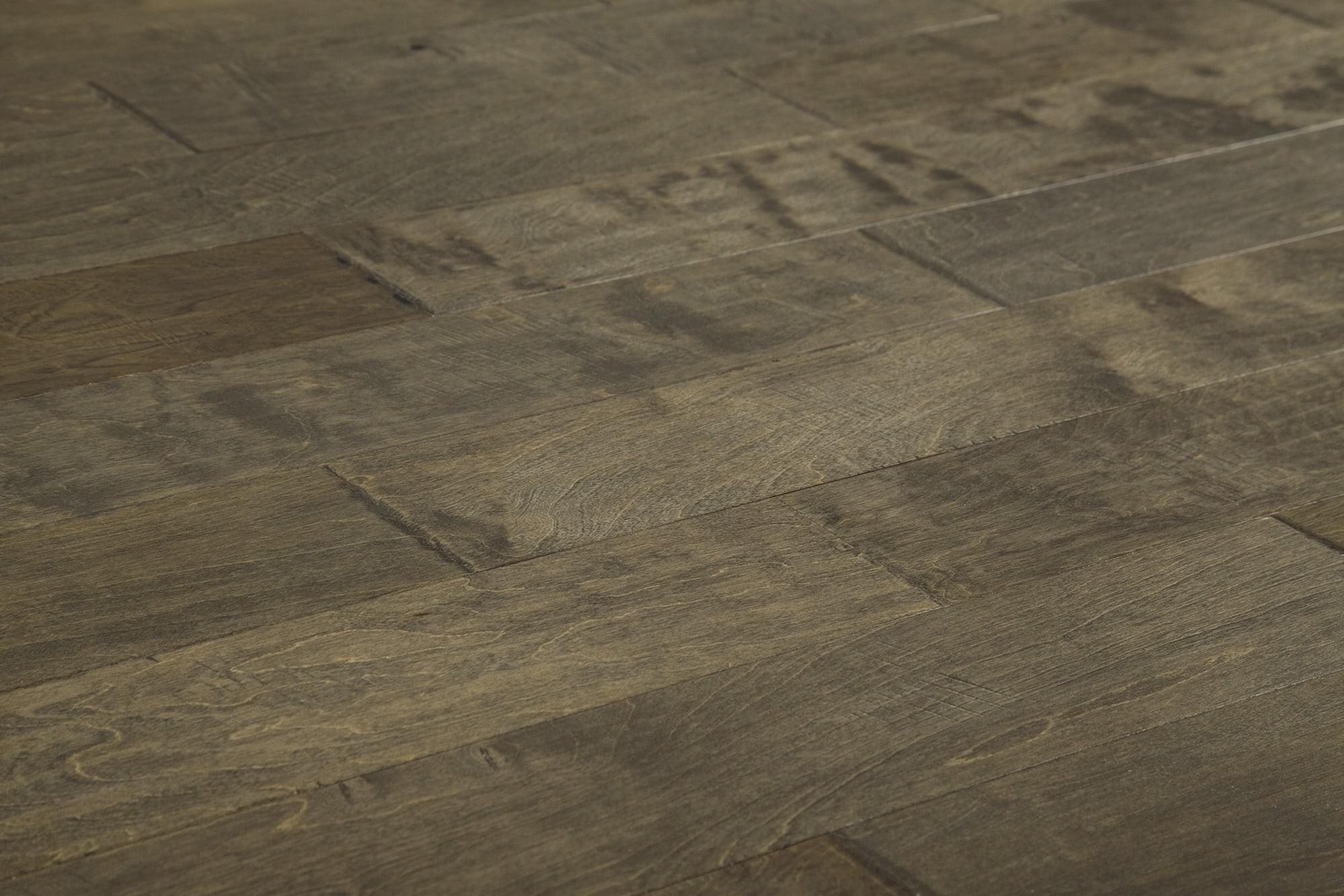
Engineered vs solid hardwood is the decision most Twin Cities homeowners are really wrestling with when they say they want a wood floor, and here in Minnesota the answer hinges on something the national buying guides skip: our seasonal humidity swing. Forced-air furnaces dry a house out to 15 to 25 percent relative humidity in a January cold snap, then July can push it past 60 percent, and a wide solid plank moves across that range enough to open winter gaps and cup in summer. Anton Korotchuk has installed and refinished both engineered and solid hardwood across the west metro, and this guide walks through the same call he makes on-site: where the plywood-core engineered board is genuinely the smarter buy, and where solid wood still earns its keep.
Engineered vs solid hardwood: what's actually different
Both are real wood on top. Solid hardwood is a single plank of solid timber, three-quarter inch thick, milled from one species all the way through. Engineered hardwood is a real hardwood veneer, anywhere from about 2mm to 6mm of the same species you'd get in solid, bonded over a cross-layered plywood or HDF core. That cross-ply core is the whole story: because the layers run in opposing directions, the board resists the seasonal expansion and contraction that a solid plank can't fight, which is exactly why engineered handles a Minnesota humidity swing with less movement at the seams.
The core is the decision, not the finish. Two boards can look identical on the showroom rack and behave completely differently over your Chanhassen basement slab in February.
Walk on both finished and you often can't tell them apart, because the wear surface is the same species and the same finish. The difference shows up over years and over the wrong subfloor, not on the sample board. That's the part we want you to weigh before you pick. You can see the finished projects and the full lineup on our engineered and solid hardwood floor installation page.
Can you install engineered hardwood in a basement?
Yes, and this is the single biggest reason engineered exists. Solid hardwood should never go below grade. A basement slab wicks ground moisture year-round, and a solid plank nailed or glued over that will absorb it, cup, and eventually fail, which is why no manufacturer warranties solid wood below grade. Engineered hardwood, with its dimensionally stable cross-ply core, is rated for below-grade installation and can float, glue down, or in some systems nail over a proper moisture barrier.
The catch that isn't optional in Minnesota: the slab still has to be tested. We take a moisture reading and check flatness before a single board goes down, because a slab that's damp or badly out of flat will telegraph or trap water no matter how good the plank is. Common basement calls we handle:
- Finished basement over a dry, flat slab: engineered hardwood, floated over a vapor-barrier underlayment, gives a true wood floor where solid legally and physically can't go.
- Basement with any moisture reading of concern: address the slab and drainage first, then install. We won't lay wood over a wet slab and call it done.
- Slab-on-grade main floors (some newer west-metro builds): same rule as a basement. Engineered over slab, not solid.
"If it's below grade or over a slab, the question isn't engineered vs solid. It's engineered, or it's a different product entirely."
Where engineered hardwood wins
Beyond basements and slabs, engineered pulls ahead in a few specific situations that come up constantly on Minnesota jobs. Match the floor to the room and the subfloor, not to the brochure:
- Over radiant heat: engineered is the standard choice because its stable core tolerates the surface-temperature cycling that would move and gap a solid plank.
- Wide planks: a 7-inch-plus solid board moves a lot across our humidity range, so wide-plank looks are far safer in engineered, which holds its width.
- Slab and below-grade spaces: covered above, and the reason engineered exists at all.
- Faster, cleaner installs: many engineered lines click or glue down with less on-site sanding, which shortens the job and the dust.
Where solid hardwood still wins
Solid hardwood is not the old-fashioned choice, it's the right choice in the right room. On a main level over a sound wood subfloor, above grade, with a humidifier keeping winter air reasonable, solid wood is the longest-lived floor you can buy. The reason is refinishing. A three-quarter-inch solid plank can be sanded and refinished many times over its life, so a solid floor can outlast several generations of finish, style changes, and even careless renters.
Rule of thumb from the bench: main level, above grade, staying put for decades and want to change the color someday? Solid still wins on longevity.
That refinishability is also why solid holds up as an investment in an older Minneapolis or St. Paul home with existing hardwood. If you already have solid floors and they look tired, refinishing them is almost always the better spend than replacement. We handle that work too, so if your existing floors are solid, ask us to look before you assume they need to come out.
When neither hardwood is the right call
We'll say it plainly: sometimes wood isn't the answer, and we'd rather tell you than sell you the wrong floor. A full bathroom, a laundry, or a mudroom that sees standing water is a job for waterproof luxury vinyl or tile, not hardwood of either kind. A rental you're turning over fast and cheap doesn't need the cost of engineered wood when rigid core vinyl does the job and shrugs off abuse. And if your subfloor has a real deflection or moisture problem, that gets fixed first, because no floor floats over a bad substrate. When hardwood is right, it's worth every dollar. When it isn't, we'll point you to what is.
Frequently Asked Questions
Does engineered hardwood work with radiant heat?
Yes, and it's the recommended wood floor over radiant heat. Engineered hardwood's cross-layered core stays dimensionally stable as the floor surface warms and cools with the heating cycle, so it resists the gapping and cupping that the same temperature swing would cause in a solid plank. Solid hardwood over radiant is risky and many manufacturers won't warranty it. Confirm the specific engineered line is rated for radiant, follow the manufacturer's maximum surface temperature, and bring the system up slowly after install. We check the ratings and the subfloor before recommending a product over any radiant system.
Can engineered hardwood be refinished?
Sometimes, and it depends entirely on the veneer thickness. An engineered board with a thick wear layer, roughly 3mm or more, can usually be sanded and refinished once or twice over its life. A thin 2mm veneer can generally only be lightly screened and recoated, not fully sanded, because there isn't enough real wood above the core to take another aggressive sanding. Solid hardwood, at three-quarter inch, can be refinished many more times. If refinishing decades down the road is a priority for you, that points toward either solid or a premium thick-veneer engineered line, and it's worth telling us up front so we spec accordingly.
Which is more expensive, engineered or solid hardwood?
It's not a clean answer, because both span a wide range depending on species, veneer or plank thickness, and finish. A premium thick-veneer engineered floor can cost as much as or more than mid-grade solid, while a budget engineered line runs less. The more useful way to think about it: engineered often costs less to install over a slab or basement because it avoids the substrate work solid would demand there, and solid can be the better lifetime value on a main floor because it refinishes so many times. We quote the total for your specific rooms and subfloor rather than a per-square-foot guess, so you'll know the number before we start.